


- by Andrew Balshaw
Titanium vs. Steel, Iron & Aluminium: Is It Worth the Upgrade?
- by Andrew Balshaw
Six habits that keep your Emberline warm for a decade instead of a season.
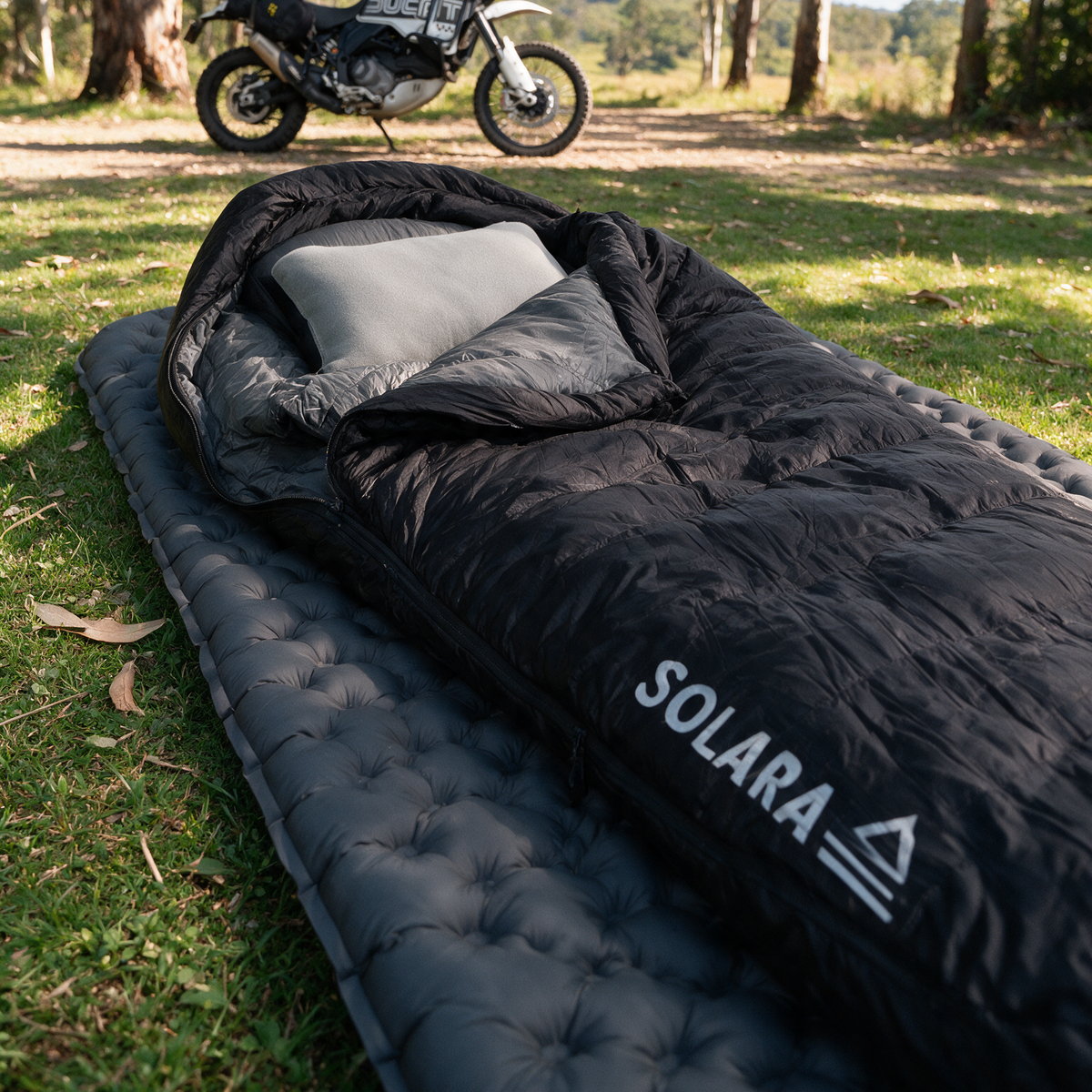
Down works by trapping air. Every cluster opens into a three dimensional web of filaments, and the still air caught inside that web is what keeps you warm at 2am when the temperature drops and condensation starts running down the inside of the fly. The down itself does almost nothing. The air does the work.
Which makes every care decision the same question asked six different ways: does this help the down stay open, or does it flatten it? Compression flattens it. Body oils coat the filaments and stop them springing back. Moisture mats the clusters together, then rots them. Harsh detergent strips the natural oils that give down its resilience in the first place.
The Emberline is built to outlast a lot of trips. Whether it actually does is mostly decided by what happens in between them.
Between trips the Emberline lives in its cotton sack, loose and uncompressed, somewhere dry and dark. Down that sits squashed for months loses loft permanently, and loft is warmth.
The compression sack is for the bike, not the wardrobe. If you are short on space, hang the bag by its foot loop in a cupboard rather than folding it into a box under the bed.

A liner takes the sweat, sunscreen and road grime so the down does not have to. It weighs almost nothing, packs to the size of a fist, and adds a little warmth on the cold nights.
Mostly though, it is the cheapest way to put years between washes. And washing is the hardest thing a down bag ever goes through.

Body oils collect in the same three places every single time: the collar, the hood edge, and the cuffs. A damp cloth with a small amount of down wash on those spots handles most of what a full wash would, without ever soaking the fill.
Work the fabric gently between your fingers, rinse the cloth, go over it again with clean water, then let it air dry completely before it goes anywhere near storage.

A down bag rarely dies on a trip. It dies slowly, in a cupboard.
Still stuffed in the sack it was carried home in
Cold water, a clean bath, and a proper down wash. Never regular detergent or fabric softener, both of which strip the natural oils that let the clusters spring back at all.
Press the suds through the baffles gently rather than scrubbing, then rinse until the water runs clear. Squeeze, do not wring. When you lift it out, support the whole bag with both arms: wet down is heavy enough to tear a baffle wall from the inside.

Lowest heat setting, two or three clean dryer balls to break up the clumps, and a few hours of patience. Stop every twenty minutes, pull it out, and feel along the baffles for cold dense pockets.
Those pockets are wet clumps of down and they need to be broken apart by hand before they will dry. It is not finished until the bag feels evenly lofted end to end. Down stored even slightly damp will clump, then mould, and it never quite comes back.

Unpack it the day you get back and let it hang or lie open for a few hours before it goes into storage. On a longer trip, drape it over the tent or the pillion seat in the morning sun for twenty minutes while you make coffee.
It is a small habit and it matters more than any of the dramatic ones. Slow moisture build up ends more down bags than any single disaster ever will.

Screenshot this one. It is the version you will actually use.
Every one of these is recoverable, right up until it is not.
Looked after properly, a good down bag will outlast the bike it travels on. That is the whole idea behind the Emberline: buy once, sleep warm, go make the story.
